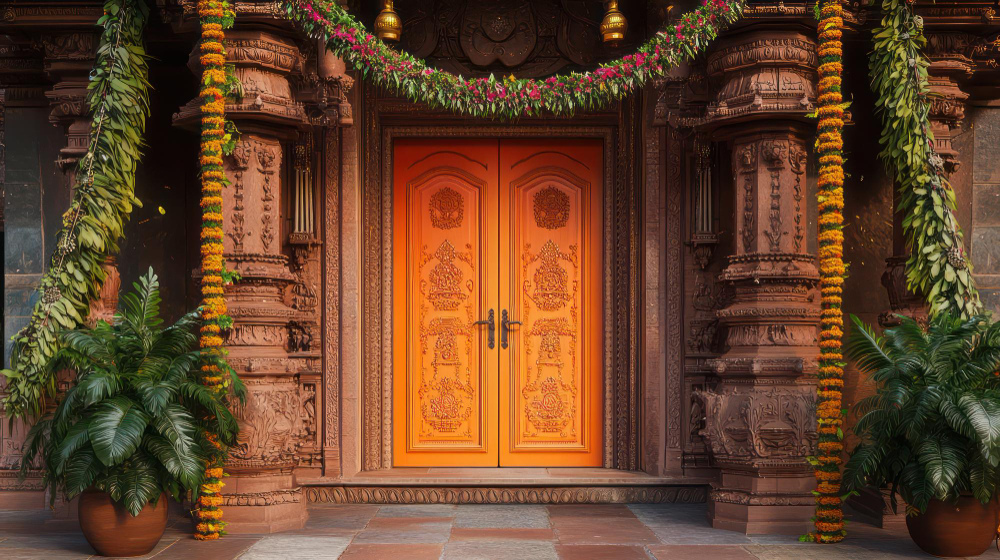
Why the Pooja Door Deserves Special Attention
The entrance door is often the first visible element of a pooja room. A thoughtfully designed door can make even a small prayer space feel more defined and attractive.
Unlike ordinary interior doors, pooja doors often feature decorative elements such as:
- Traditional carvings and motifs
- Jali or lattice patterns
- Floral and geometric designs
- Religious or traditional symbols
- CNC-cut patterns
- Glass panels
- Wooden frames with decorative borders
The door should complement the mandir, flooring, walls, and overall interior style rather than looking like a separate element.
For homes with limited space, choosing the right pooja room door design for home can also help create a sense of openness without compromising the identity of the prayer area.
Popular Pooja Door Design Styles
There is no single style that works for every home. Some homeowners prefer detailed traditional craftsmanship, while others want clean and contemporary patterns.
Popular pooja door designs include:
Traditional Wooden Doors
Ideal for homes with classic or ethnic interiors.
CNC-Cut Doors
Suitable for homeowners who want precise patterns and contemporary detailing.
Wood and Glass Doors
Create a lighter appearance while allowing the mandir to remain visible.
Jali Doors
Provide ventilation and visual separation while maintaining an open feel.
Minimal Wooden Doors
Work well with modern interiors where simple lines and subtle detailing are preferred.
The best design is one that matches the architecture and interior style of your home.
Traditional Carved Pooja Doors
Traditional wooden doors continue to be popular for pooja spaces because they bring warmth and craftsmanship into the room.
Carved pooja room doors can include floral patterns, traditional borders, bells, leaves, arches, and other decorative elements. The carving can be subtle or highly detailed depending on the overall interior.
Wooden pooja door designs with handcrafted details are particularly suitable for homes featuring wooden furniture, traditional decor, or classic Indian design elements.
When choosing a carved door, consider the size of the room. Highly detailed designs may look beautiful, but they should still be proportionate to the entrance.
Modern and CNC-Cut Pooja Door Designs
For contemporary homes, CNC pooja door designs offer a different design approach. CNC technology allows detailed patterns to be cut accurately into wooden panels.
Common CNC patterns include:
- Geometric designs
- Floral patterns
- Mandala-inspired patterns
- Jali-style cut-outs
- Simple traditional motifs
- Abstract patterns
CNC-cut doors can be designed to suit the exact dimensions of the pooja room. This makes them useful when homeowners want a customized look rather than a standard door.
They can also be combined with glass, backlighting, or contrasting wood finishes to create a modern mandir entrance.
Best Wood Choices for Pooja Doors
The type of wood influences the appearance, durability, texture, and cost of the door.
Depending on the design and budget, homeowners may consider options such as teak and other suitable hardwoods or engineered wood products.
Teak is often chosen for premium wooden doors because of its natural appearance and durability. Other materials can also work well when properly selected and finished for interior use.
When choosing wood, consider:
- Door size
- Carving depth
- Design complexity
- Expected usage
- Budget
- Interior colour scheme
- Maintenance requirements
For heavily carved designs, the material should be selected based on the construction requirements as well as appearance.
Pooja Room Door Size and Placement Tips
Pooja room door size and placement should be planned along with the room layout, furniture, and available walking space.
Before finalizing the door, check:
- Available wall and opening width
- Ceiling height
- Clearance for opening and closing
- Position of the mandir
- Nearby furniture or walls
- Natural light and ventilation
- Accessibility within the room
For a compact pooja space, a door that occupies too much visual or physical space may make the area feel crowded.
The door should also be easy to operate and proportionate to the room. If the pooja area is part of a larger living space, the entrance should create separation without making the room feel closed off.
Single Door, Double Door, or Sliding Door: Which to Choose?
The right door type depends largely on available space.
Single Door
A practical option for smaller pooja rooms and compact openings. It is simple, functional, and easy to customize.
Double Door
Works well for wider entrances and can create a more traditional, grand appearance. It also provides a larger opening when both panels are opened.
Sliding Door
Useful where swing space is limited. Sliding designs can work particularly well in apartments or compact homes.
For larger homes, double mandir door designs for home can become a decorative feature, while smaller spaces may benefit from a simple single or sliding design.
Finishes and Colours That Suit a Pooja Room
The finish should complement the rest of your home's interiors.
Natural wood finishes can highlight the grain and craftsmanship of a carved door. Darker wood shades can create a traditional appearance, while lighter finishes can suit modern interiors.
Common choices include:
Natural Wood Finish
Light Brown
Medium Teak Shades
Dark Wood Tones
Matte Finishes
Polished Finishes
Wood Combined With Glass
Instead of selecting a colour only because it looks attractive individually, compare it with the flooring, walls, furniture, and mandir structure.
Small Pooja Room Ideas for Compact Homes
A small prayer area does not require a large room. With the right layout, even a compact space can become functional and visually appealing.
Consider:
- Wall-mounted mandirs
- Compact wooden doors
- Sliding doors
- Jali panels for ventilation
- Light-coloured finishes
- Vertical storage
- Simple CNC patterns
- Built-in shelves
Avoid overloading a small room with heavy carvings, bulky furniture, or too many decorative elements.
For compact homes, a simple door with carefully selected detailing can often create a cleaner appearance than an oversized decorative design.
How Sri Balaji Design Works Creates Custom Pooja Doors
Every home has different dimensions, interior styles, and design preferences. A ready-made door may not always provide the exact size, pattern, or finish you are looking for.
Sri Balaji Design Works focuses on creating customized wooden designs based on the requirements of each project. From traditional carved patterns to contemporary CNC detailing, the design can be planned around the available space and overall interior.
If you are searching for pooja door designs in Hanamkonda and Warangal, customized design support can help you select the right pattern, material, size, and finish for your home.
For homeowners interested in custom wood carving in Hanamkonda and Warangal, Sri Balaji Design Works can create decorative wooden elements that bring craftsmanship and personalization to pooja rooms and other parts of the home.
Frequently Asked Questions About Pooja Door Designs
Create a Pooja Entrance That Feels Personal
Your pooja room does not need to be large to make an impact. A well-designed door, suitable wood, thoughtful detailing, and the right finish can turn even a compact prayer space into a beautiful part of your home.
For customized pooja door designs in Hanamkonda and Warangal and detailed custom wood carving in Hanamkonda and Warangal, connect with Sri Balaji Design Works to explore designs that match your home's style, space, and requirements.
